Patrik Svensson

Image of HUMlab logoPatrik Svensson Director of HUMlab, Ume?• University, is giving a talk tomorrow here at McMaster.

In this seminar I will start out from a general discussion of the visual in the humanities and in the digital humanities, and a critique of traditional ‘humanities computing’ which tends to be predominantely textual. I will base my further investigation on several projects from different areas including art history, history, antrophology and linguistics. Key points of discussion include the materiality of interfaces, added values, innovation strategies, and the role of the visualization. Among relevant technologies are geographical information systems, multi-spectral analysis and virtual worlds. Digital culture also gives us highly visual study objects such as computer games, social software and electronic literature, and these will be considered. The final part of the talk deals with physical lab and studio spaces for the digital humanities. How is the visual articulated in such collaborative work spaces? It will be suggested that the humanities may benefit from working with many, individual screens in collaborative settings rather than immersive environments such as CAVEs. HUMlab at Ume?• University will be used a case study and I will describe a planned (and funded!) expansion of the lab which will add thirteen new screens to the studio space.

From the descriptions of the HUMlab it sounds like a creative space – they have paid attention to creating a space where people can meet across the humanities and IT disciplines.

Don’t Click It: Interaction Research

Don't Click It Logowww.dontclick.it is a site both about research into interaction (and clicking) and an example of how one doesn’t need to click to interact. You navigate the Flash site using gestures, it discusses the question of clicking and alternatives, and it tracks mouse movement.

There is a nice moment when it asks you a quick survey which, of course, I clicked on, at which point it reminds you not to click.

This is thanks to Nick.

Eddo Stern: Landlord Vigilante and other Machinema

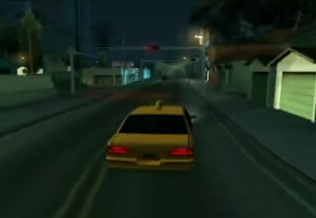
cabvideo.jpgKCET Online has an interview with Eddo Stern on Landlord Vigilante that has links to three of his machinema art films, Landlord Vigilante, Vietnam Romance and Waco Resurrection. Landlord is a longer narrated story of a woman taxi driver/landlord. Vietnam takes period music and games recreating the period stitching together vignettes that recall popular culture on the war. Waco defies description, or resurrection. All use game engines to render the story.

I’ve blogged Eddo Stern’s work on art and games before.

The Dictionary of Words in the Wild

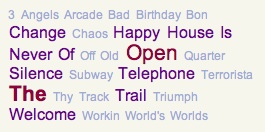
Image of Word Cloud The Dictionary of Words in the Wild is an experiment in public textuality that I’m leading. Andrew MacDonald has done the programming and is contributing images (along with others). You can get an account and upload pictures of words or phrases. We have an application programming interface that you can use to then create web applications that call the dictionary. Join, sample, load! We need pictures.

Try a phrase:


James pointed me to a similar experiment, The Visual Dictionary – a visual exploration of words in the real world. This focuses on single words and has a ranking/rating system. It doesn’t, however, have the API we have. I wonder how we can interoperate? Can such dictionaries be a movement?

Haefner: Kite Aerial Photography

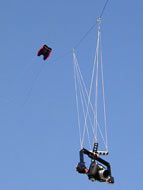
Kite Photo RigKite Aerial Photography is a photography site by by Scott Haefner that includes 360 degree panoramas taken from kites. Haefner is a professional photographer and site designer whose site also describes the equipment needed to kite aerial photography. The site itself, along with its companion on his Ground-based Photography, is an example of a well designed photo site. Thanks to Shawn for this.

Live coding: Impromptu

Live coding is coding as performance. Matt alerted me to a Impromptu which is a programming language designed for sound coding performances. There is a gallery of sound performances and code at the site to give an idea of what the live coders might be typing to get what effects.

Live coding would seem to be connected to realtime coding competitions like live coda when the coding challenge is performative and the competition environment can be witnessed as a performance.

Pedagogically I wonder if live coding is more effective than write-compile-run coding. Certain languages like Ruby have live coding environments that let you type commands and see the results immediately. What is different here is the idea of language created for live coding in a performative context.

mandalabrot.net

Mandalabrot Imagemandalabrot.net is the home of kiddphunk (Ian Timourian) and his visualizations, experiments and remixes. He has a number of Context Free Design Grammar experiments. Timourian also has a photo kiddphunk site with an doubled way of showing images.

Thanks to Johnny R. for pointing me to this collection of “Explorations of Generative Art, Mathematics, Algorithmic Design and the Beauty of Life / Vol 1”.