TRAFFIC: Conceptual Art in Canada 1965-1980

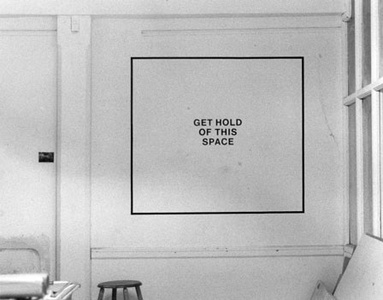
Gordon Lebredt Get Hold Of This Space 1974

Go see the TRAFFIC: Conceptual Art in Canada 1965-1980 exhibit at the Art Gallery of Alberta. It is a dense exhibit with hundreds of works and relevant documentation. It is organized by cities (a room for Halifax, one for Montreal …) and seems carefully researched. You will find yourself bewildered and amused at the variety of conceptual art projects executed in Canada. You will notice that everything was done back then with typewriters, video and tape recorders. The colors look bleached the way old and cheap photographs are. The aging of all those postcards and paper forms dates the works as if they were brought out of the attic or from the back of the family station wagon left in the sun.

This show was developed by a number of museums (from Vancouver to Halifax) and is touring those museums. You can read about the show when it was in Toronto. Or you can read about it in Magenta.
NFB: Out My Window

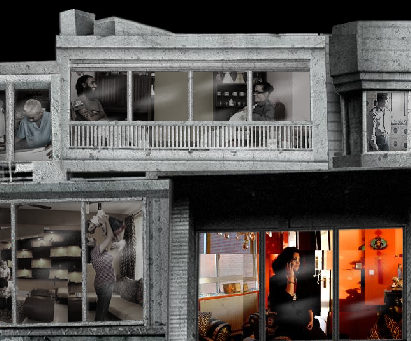
Joyce pointed me to a National Film Board (NFB) interactive work, Out My Window: Interactive Views from the Global Highrise. The work, directed by Katerina Cizek documents the lives of people in apartments through their apartments. For each apartment there is a 360 degree view that you can pan around (sort of like QuickTime VR.) Certain things can be clicked on to hear and see short documentaries with the voice of the dweller. These delicate stories are very effective at giving us a view of apartment life around the world.

MA in Experimental Digital Media at Waterloo

Thanks to David I found out about the University of Waterloo’s new MA in Experimental Digital Media. The MA looks like something you could do in 12 months, but it isn’t clear. The MA doesn’t have a thesis – instead it has project which can be a prototype with commentary:

The Project is the culminating point of the program, in which students demonstrate a mastery of critical theories and theoretical concepts by embodying them in digital artifacts, environments, or practice.   Projects will entail the design, conception or production of objects-to-think-with, evocative objects that focus attention on key cultural and theoretical issues in the humanities.

In many cases the project will remain at a design or prototype stage, although the manufacture of the object is by no means ruled out in principle.  The design or prototype itself will be accompanied by a commentary of 40 pages in which the student will describe the theoretical and cultural context of the project and its aims,  analyse its feasibility and its functioning, describe its cultural and rhetorical significance, and indicate its possible lines of development.

Bibliothèque Nationale – a set on Flickr

bnf

A couple of weeks ago I went to Paris for a meeting and was able to visit the new (see my Flickr set on the Bibliothèque Nationale). It is hard to tell from one short visit how it is as a library, but it is a stunning building to walk around. It spoke to me of exclusion – a cave (or inferno) of knowledge that you get progressive access to. The deepest levels are reserved for the true scholars (not tourists like me.)

The Power Plant: Laurence Weiner

Image of Show

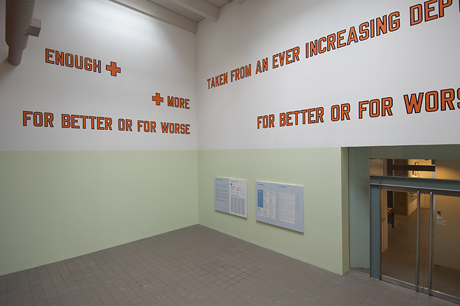
The Globe and Mail has a review of the Lawrence Weiner show at the The Power Plant in Toronto (who must have one of the worst gallery web sites I’ve seen in a long time – lots of navigation for no content in very small type!) e-flux has a better site about the show.

The Globe and Mail article, “Brilliantly maddening word sculptures” by Gary Michael Dault (Thursday, March 19th, 2009, Section R, p. 1) nicely explores the issues around language and art raised by such conceptual work. Dault walked through the show with Weiner and Dault ends the articles with,

We talk about whether language actually means anything at all. “Language does mean something,” Weiner contends gaily, “but not what you thought it meant.” There’s the other side of a cul-de-sac for you.

Image of Weiner Art Work

Weiner’s sculpture with words goes back to the 1960s. His Declaration of Intent (1968) articulates a relationship between instructions for a work of art and the fabricated work.

“1. The artist may construct the piece. 2. The piece may be fabricated. 3. The piece need not be built. Each being equal and consistent with the intent of the artist the decision as to condition rests with the receiver upon the occasion of receivership.”

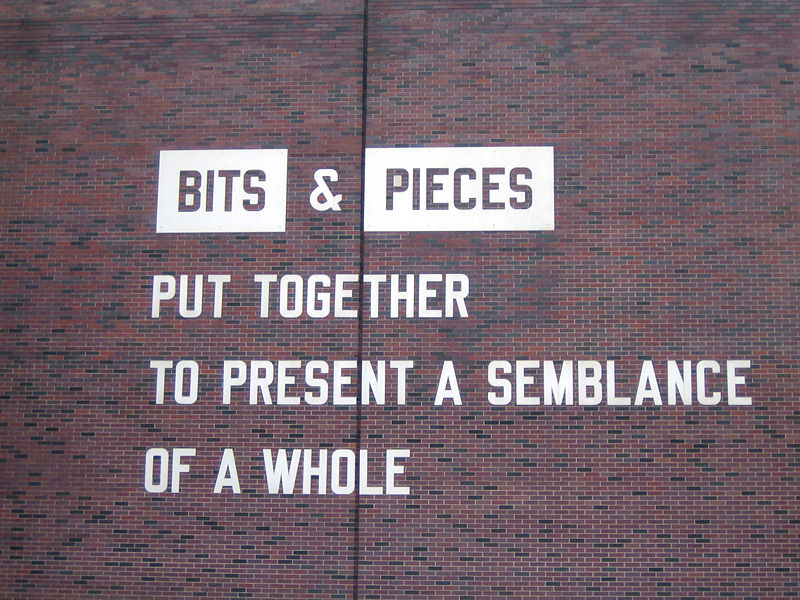
Does it matter if the work is actually put together from bits and pieces? Do the bits and pieces of social media (like the bits of blog entires, or the pictures of words in the Dictionary) make a whole or its semblance?

The Pool

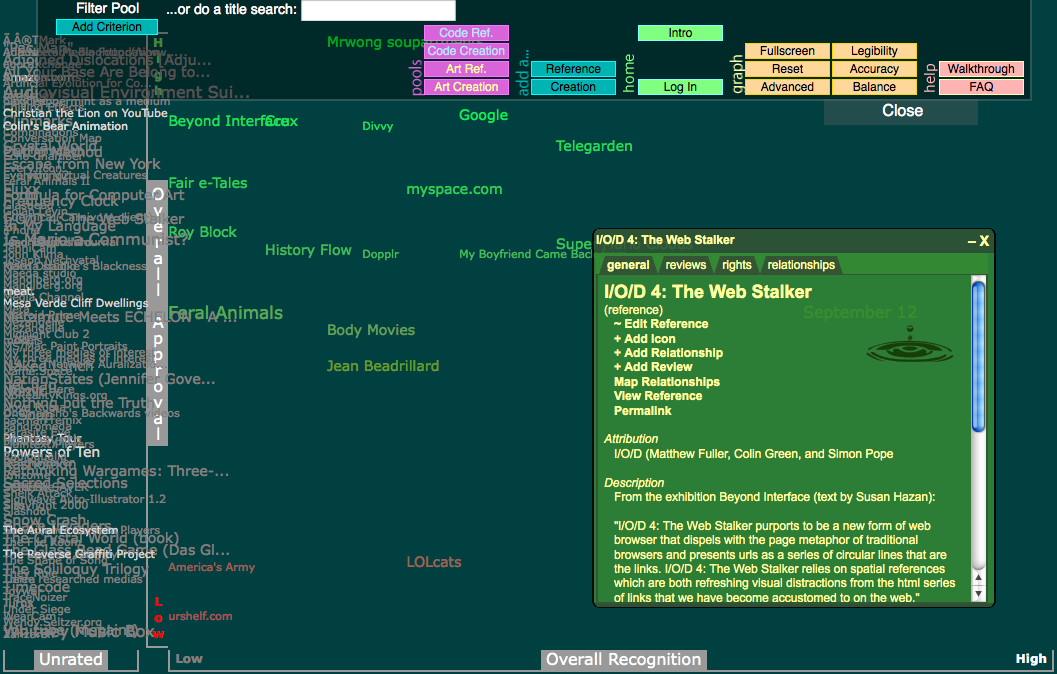
Screen shot of The PoolThe Pool is a project from the University of Maine new media group, Still Water who also developed ThoughtMesh. It is a collaboration between faculty and students that provides a visual space where ideas can be described (intent), approached and released. (The metaphor is fishing and releasing.) It encourages sharing, rating, and redevelopment of ideas. The have pools for code and art.

The Pool offers a very different message. This online environment is an experiment in sharing art, text, and code–not just sharing digital files themselves, but sharing the process of making them. In place of the single-artist, single-artwork paradigm favored by the overwhelming majority of studio art programs and collection management systems, The Pool stimulates and documents collaboration in a variety of forms, including multi-author, asynchronous, and cross-medium projects. (learn more -> purpose)

The Chronicle of Higher Education in New-Media Scholars’ Place in ‘the Pool’ Could Lead to Tenure (Andrea L. Foster, May 30, 2008, Volume 54, Issue 38, Page A10) discusses The Pool as an alternative form of peer review for getting tenure, which rather misses the point for me. What impresses me about this is the collaboration between students and faculty in experimentation around structured collaboration. The Pool could dry up, and some of the code pools seem rather poorly stocked, but that wouldn’t detract from what seems like thoughtful and sustained experimentation with social collaboration. The wiki, Flickr, Facebook and blog models of Web 2.0 social knowledge dominate our thinking about what is possible. The Pool reminds me that we don’t have to adapt successful models, there is room for new ideas. Catch this and release it.

Fortune of the Day – Fortune Hunting

Visual Collocator

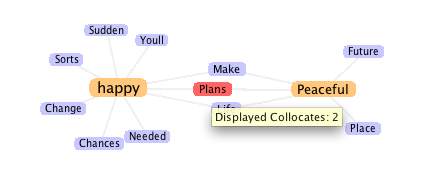
Lisa Young with the support of the Brown University Scholarly Technology Group (STG) has developed a Fortune of the Day – Fortune Hunting interactive art site based on a collection of scanned fortune cookie slips she created. It has elements of a public textuality site like the Dictionary though focused completely on fortunes. The interface is simple and elegant. I believe it has been exhibited recently for the first time. The project uses the TAPoRware Visual Collocator for one of its interfaces.

Dictionary of Words in the Wild: Over 3000

Wild Words

The Dictionary of Words in the Wild now has over 3000 images and almost 4000 unique words.

I’ve just finished 4 days hiking in the wilds of the northern shore of Lake Superior (Pukaskwa National Park) on one of the most spectacular back country hiking trails I know of. What struck me in the woods an on the shores of Superior was that there are no words in the wild unless scratched on a tree or rock. The only words I saw were all the logos on our clothing, tent, sleeping bags and so on. It really isn’t wild if there are words.