Situational Awareness … or Blindness

You can see the future first in San Francisco.

The New York Times has a story about the company Situational Awareness, Floundering A.I. ‘Nostradamus’ Hedge Fund Is Rescued by Rival. The company was founded by Leopold Aschenbrenner who wrote an essay on Situational Awareness arguing that,

The AGI race has begun. We are building machines that can think and reason. By 2025/26, these machines will outpace many college graduates. By the end of the decade, they will be smarter than you or I; we will have superintelligence, in the true sense of the word. Along the way, national security forces not seen in half a century will be unleashed, and before long, The Project will be on. If we’re lucky, we’ll be in an all-out race with the CCP; if we’re unlucky, an all-out war.

The company basically was set up to bet on the predictions from the 2024 essay. Alas, they bet too much and there has recently been a drop in the value of some of the AI-related companies they bet on so they had to be rescued.

The phrase, “situational awareness”, however comes from the belief that those in and around San Francisco, working in AI labs, have a privileged awareness of what is happening or going to happen. The essay begins with the phrase,

Before long, the world will wake up. But right now, there are perhaps a few hundred people, most of them in San Francisco and the AI labs, that have situational awareness.

The subtext is that the rest of us are ignorant and should believe the SF folk because of where they are and where they work. This runs in the face of research about the value of expert predictions. Philip E. Tetlock’s work on forecasting suggests that generalists outperform those with a narrow expert focus.

Our generation too easily takes for granted that we live in peace and freedom. And those who herald the age of AGI in SF too often ignore the elephant in the room: superintelligence is a matter of national security, and the United States must win.

There is a further issue with the essay, and that it is the compounded prediction that since superintelligence is going to happen, and it will be the most powerful weapon ever developed, it is important that WE (the Unites States) control it. It is all about the “win” and betting on that win.

How does one unpack the assumptions in this essay and situational ideology?

Predatory community

Projects that seek to create new communities of marginalized people to draw them in to risky speculative markets rife with scams and fraud are demonstrating

Through a Washington Post article I discovered Molly White who has been documenting the alt-right and now the crypto community. She has a blog at Molly White and a site that documents the problems of crypto at Web3 is going just great. There is, of course, a connection between the alt-right and crypto broculture, something that she talks about in posts like Predatory community which is about crypto promotions try to build community and are now playing the inclusive card – aiming at marginalized communities and trying to convince them that now they can get in on the action and build community. She calls this “predatory community.”

Groups that operate under the guise of inclusion, regardless of their intentions, are serving the greater goal of crypto that keeps the whole thing afloat: finding ever more fools to buy in so that the early investors can take their profits. And it is those latecomers who are left holding the bag in the end.

With projects that seek to provide services and opportunities to members of marginalized groups who have previously not had access, but on bad terms that ultimately disadvantaged them, we see predatory inclusion.22 With projects that seek to create new communities of marginalized people to draw them in to risky speculative markets rife with scams and fraud, we are now seeing predatory community.

Dead By Daylight fans unhappy Hellraiser model is an NFT

Apparently Non-Fungible Tokens (NFTs) of game models are not going down well with fans according to a story, Dead By Daylight fans unhappy Hellraiser model is an NFT.

Even thought Behaviour isn’t selling the NFTs themselves, they are facilitating the sale of them by providing the models from the game. Gaming fans seem to view blockchain and NFTs as dubious and environmentally unsound technology. Behaviour’s response was,

We hear and understand the concerns you raised over NFTs. Absolutely zero blockchain tech exists in Dead by Daylight. Nor will it ever. Behaviour Interactive does not sell NFTs.

On a related note, Valve is banning blockchain and NFT games.

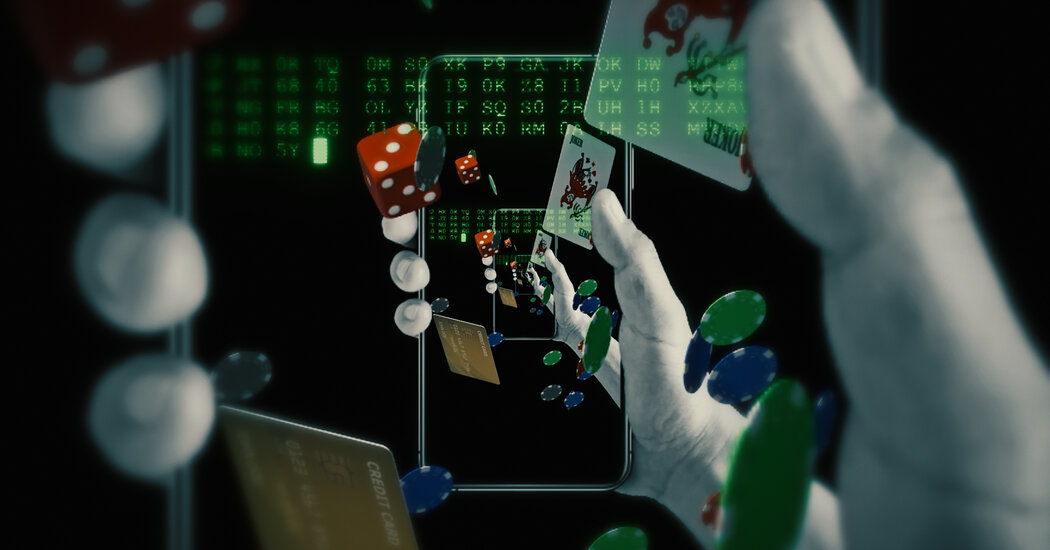
What Sky Bet, The Gambling App, Knows About You

Sky Bet, the most popular one in Britain, compiled extensive records about a user, tracking him in ways he never imagined.

The New York Times has a good story about What Sky Bet, The Gambling App, Knows About You. It talks about the profile that Sky Bet in the UK built on a customer who had an addiction problem with gambling.

The company, or one of the data providers it had hired to collect information about users, had access to banking records, mortgage details, location coordinates, and an intimate portrait of his habits wagering on slots and soccer matches.

We tend to focus on what the big guys have and forget all the lesser known information aggregators and middlemen who buy and sell data. This story also provides an example of how valuable data can be to a business like online gambling that wants to attract the clients who are likely to get addicted to gambling.

Call for Papers for Replaying Japan Journal, Issue 3

The Replaying Japan Journal has issued a call for papers for Issue 3 with a deadline of September 30th, 2020. See the Current Call for Papers – Replaying Japan. The RJJ publishes original research papers on Japanese videogames, game culture and related media. We also publish translations, research notes, and reviews.

The RJJ is available online and in print, published by the Ritsumeikan (University) Center for Game Studies (See the RCGS English Pamphlet too). Inaba, Mitsuyuki is the Editor in Chief and Fukuda, Kazafumi is the Associate Editor. I and Jérémie Pelletier-Gagnon are the English Editors.

Articles in either Japanese or English are accepted. The Japanese Call for Papers is here.

Kompu Gacha: Banning Loot Boxes

I’ve been meaning to write for while about Kompu Gacha (or Complete Gacha), a game mechanic that was popular in Japanese mobile games until it was banned in 2012 (see this story too). Kompu gacha is an extreme (or complete) form of the gacha game mechanic which was in turn inspired by the ubiquitous gachapon vending machines you find in Japan where for a couple of coins you get a small loot box (sphere) with a random gift in some theme or series. Children collect items by buying the loot boxes with the hopes of getting new trinkets in series that they collect and trade. Mobile games in Japan borrowed this well known play mode and began to include virtual loot boxes that you could buy in-game. Developers fine tuned the system to the point where millions of yen were being spent on vanishingly rare items. This led to a public controversy after there were cases of youth spending thousands of dollars that then led to banning the loot boxes.

There are a number of reasons why this mechanic and its banning are interesting:

  • It is an example of the grey area between gaming and gambling. In fact, Belgium has also outlawed video game loot boxes as gambling.
  • Gacha mechanics in general are economically important to Japanese mobile/social game design.
  • They are an interesting mechanic in and of themselves and show how an element of randomness that has consequences can be fun. Philosophers and historians of gambling have noted the importance of the element of real risk to the intesity of gambling. It gives everyone a chance to be heroic.

I should mention that it was Mark Johnson and Tom Brock who drew my attention to loot boxes. They have been doing important research on loot boxes and giving papers on the subject.