According to a BBC story, Global digital divide ‘narrowing’, the World Bank is reporting that the developing world is catching up in usage and access to tehnologies. The World Bank doesn’t feel we need a World Summit on the Information Society. WSIS is going on anyway. WSIS has two summits, Geneva 2003 and Tunis 2005. Check out their WSIS: Declaration of Principles; Building the Information Society: a global challenge in the new Millennium. This presents a vision of the importance of the Information Society connected to freedom of expression (and opinion) and human rights.
WSIS was endorsed by the UN General Assembly (Resolution 56/183)
Continue reading Digital Divide
Pattern Books: the history of patterns
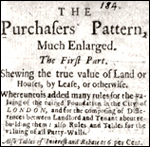
How “Pattern Books” Fueled England’s First Speculative Real Estate Market by William Baer in the Harvard Business School’s Working Knowledge (Feb. 17, 2003) provides an interesting peek into the recurring idea of patterns as an alternative to rules or theories.
The term “pattern books” was used generically for books covering a variety of specialized topics that were sold to the trades and the general public. These became quite popular in the seventeenth century and on into the eighteenth, and were part of a rapidly growing publishing industry. “Writings on trade, credit, agricultural improvements, and employment schemes” are examples of some economic and commercial topics covered by pattern books.
This link came from the History Of Patterns in the Portland Pattern Repository which is one of the major foci of the WikiWikiWeb which is arguably the first wiki.
The Dave Orme authored wiki page traces the application of pattern design to software design to 1987 when at OOPSLA 87 they reported on a project for Tektronix where they applied Alexander’s “pattern stuff they’d been studying.”
horizon 0: multimedia magazine
HorizonZero is a web magazine from the Banff Centre that is beautifully implemented and shows how you can have new media and text versions of articles together.
In some sense this is what Vectors: Online journal for digital media is aiming at.
User 83211

Now what’s so special about being number 83211?
Internet Safety Day

InSafe is a Council of Europe sponsored organization promoting Internet safety information. Did you know about Safer Internet Day? One is tempted to mock such earnestness. Or you could,
Write about your journey with friends from all over the world in the exciting and sometimes dangerous cyber world of Internet and mobile technology. Take along a magical helper from the Kingdom of Internet safety.
I’m taking Alpha Dog who is good at “digging down spam”.
But seriously, what makes this site so bizarre is that it is written for children, but designed for adults. I can’t imagine any child reading pages of this stuff without any graphics and I find it hard to imagine adults reading this without cringing. Perhaps the graphical version is coming. Compare with the Canadian Media Awareness Network (MNet) to see what I mean.
Continue reading Internet Safety Day
Video Game Music Archive
The sound of play! VGMusic, or the Video Game Music Archive, claims to have over 19,000 MIDI files of game music. I suspect the reason for the MIDI is copyright. The music is organized by game platform. Here is Night Hunt for the game San Francisco Rush for the Nintendo 64.
120 Years of Electronic Music
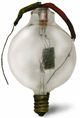
Electronic Musical Instruments: 1870 – 1990 is a clean site devoted to electronic instruments from the musical telegraph to the Optigan (don’t ask). For each instrument or company there is a page of history and images. Beauty, eh!
mSpace: exploring the semantic web
The mSpace Classical Music Browser is a topic map browser … at least that’s what I think it is.
This is peek at the semantic web to come. In this case the topic is classical music. For more see, mSpace: exploring the New Web. (What, by the way, is the .fm namespace?)
Thanks to Chris McAllister for this link.
Sheridan Interactive Multimedia: Flash Reviews and Tutorials
Dan Zen sent me links to two neat sites put together from the work of his students in the Interactive Multimedia program. The first is a series of tutorials for Flash, Sheridan Interactive Multimedia Flash Tutorials. The second is a Flash work that gathers screen shots and short reviews of other neat Flash sites. See FlashDeck – Sheridan Interactive Multimedia Cool Flash Sites.
Vectors: Online journal for digital media
Ray Siemens pointed out to me a new journal Vectors: Journal of Culture and Technology in a Dynamic Vernacular being launched by Institute for Multimedia Literacy at the University of Southern California Annenberg Center for Communication.
In addition to creating a venue for academic research and modes of expression that go well beyond traditional text to incorporate still and moving images, sound, and interactivity, Vectors seeks to significantly redefine the parameters of scholarly publication.
The subtitle for the journal seems a strange … what is a “dynamic vernacular”? Do they mean the journal will be “interactive” in an everyday fashion?
I am excited to see a journal the recognizes the importance of publishing multimedia works, but that raises the interesting question of how they hope to mount and preserve complex interactive works. Perhaps they won’t bother trying to preserve new media work they publish and will instead focus on using the medium.
Continue reading Vectors: Online journal for digital media