On Graduate Education in the Humanities, by a Graduate Student in the Humanities

Lindsay Thomas, the hard working blogger for 4Humanities has written an excellent piece On Graduate Education in the Humanities, by a Graduate Student in the Humanities. She talks about how hard it is to complete quickly when you are making ends meet by TAing and teaching constantly. She talks about the “casualization” of academic labor.

I would add to her essay that we need to think about expanding outcomes for graduate students. We design graduate programs to produce junior faculty (or casual labor who hang on in hopes of getting full-time faculty jobs.) What we don’t do is to design programs so that they prepare people for knowledge work outside the academy. This is not rocket science, there are all sorts of ways to do it and digital humanities programs could take the lead as our student acquire skills of broader relevance. But, as Lindsay points out, if you start changing or adding to graduate programs you can just extend the time to completion and students might end up no better off.

@MentionMachine: Who’s up, who’s down on Twitter?

Reading the Washington Post I was annoyed by a panel at the bottom of my screen with their @MentionMachine tracks the presidential candidates: Who’s up, who’s down on Twitter?. The @MentionMachine tracks Twitter mentions using the Twitter API and also media mentions using Trove. This is real-time social media text analysis. The Washington Post blog page on @MentionMachine argues that “Twitter was the real-time warning system” that could tell us which candidates were trending up or down. I wonder if that is reliably true or only true in selective cases.

Narrative and Technology: Curtis Wong and Geoffrey Rockwell in Conversation – YouTube

The kind folks at the Long Room Hub at Trinity College Dublin have put up the video of the “conversation” I participated in on the 6th of March. The event was called Narrative and Technology: Curtis Wong and Geoffrey Rockwell in Conversation. Curtin Wong is now at Microsoft Research, but worked for some time at the Voyager Company back in the days when they were developing some of the most interesting multimedia works.

The Digital Humanities and the Revenge of Authority

That has always been my aim, and the content of that aim — a desire for pre-eminence, authority and disciplinary power — is what blogs and the digital humanities stand against.

Stanley Fish in his blog post on The Digital Humanities and the Transcending of Mortality starts by setting himself up as an example of what the digital humanities stands against. We know that his tongue is in his cheek because he prefaces this aim for authority by mentioning David Lodge’s character Morris Zapp “whose ambition, as his last name suggests, is to write about a topic with such force and completeness that no other critic will be able to say a word about it.” It is a lovely move that he returns to at the very end when he reminds us that we are reading a “column, oops, I mean blog.” He can disarm his critics by mocking the authority he really has while using it. That authority comes from, among other things, writing a column/blog in the New York Times. Fish is a slippery Zapp, and he knows it.

Continue reading The Digital Humanities and the Revenge of Authority

What is the purpose of higher education? Live chat, 16 December

I have been invited to join a live chat on What is the purpose of higher education?. This is being organized by the Guardian Higher Education Network. I’ve never done a live chat like this, so it will be interesting to see how it works. The question we will be addressing is one posed by Aidan Byrne in his live blogging of “The Politics of the Univesity”:

Since the 2000s, academic managers and leaders have adopted the discourse of neoliberalism, presented as neutral truth, ‘common sense’ or realism. ‘Choice’ trumps all other ideas. Universities form businesses, conduct marketing, undertake ‘esteem indications’ and surveys. Private income is lionised. Students are encouraged to pursue self-interest: public service is derided. What of the future?

MLA Profession 2011: On the Evaluation of Digital Media as Scholarship

My paper “On the Evaluation of Digital Media as Scholarship” has just been published online in MLA: Profession 2011 (pp. 152-168). The PDF is freely available. The abstract reads,

As more and more scholarship is digital, we need to develop a culture of conversation around the evaluation of digital academic work. We have to be able to evaluate new types of research, like analytic tools and hypermedia fiction, that are difficult to review. The essay surveys common types of digital scholarly work, discusses what evaluators should ask, discusses how digital researchers can document their scholarship, and then discusses the types of conversations hires and evaluators (like chairs) should have and when they should have them. Where there is a conversation around evaluation in a department, both hires and evaluators are more likely to come to consensus as to what is appropriate digital research and how it should be documented.

This is part of a collection put together by Susan Schreibman, Laura Mandell and Stephen Olsen about Evaluating Digital Scholarship. McGann and Bethany Nowviskie, among others, also have papers in this issue of Profession.

Analysis of 250,000 hacker conversations


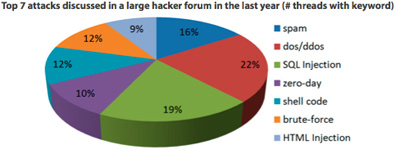
From Slashdot a story about the text Analysis of 250,000 hacker conversations. A security company Imperva has been analyzing hacker forums to understand trends, how people learn about hacking, and what are popular strategies.

In the Imperva report, Hacker Intelligence Initiative, Monthly Trends Report #5 (PDF) they describe their methodology as “content analysis” (their quotations) but it mostly involves searching for threads and reading. The report has great examples of the types of discussions.

A good example of how simple text analysis can help industry understanding.

Compute/Calcul Canada Works with Humanities

Compute/Calcul Canada has partnered with Super Micro to offer a High-Performance Computing platform for humanities researchers. Super Micro has kindly donated a HPC system that Compute Canada will make available with support to humanists. To get access you have to apply through the National Resource Allocation process. It isn’t clear what you do as a humanist.

Continue reading Compute/Calcul Canada Works with Humanities

Gamers’ discovery could generate anti-HIV drugs – Health – CBC News

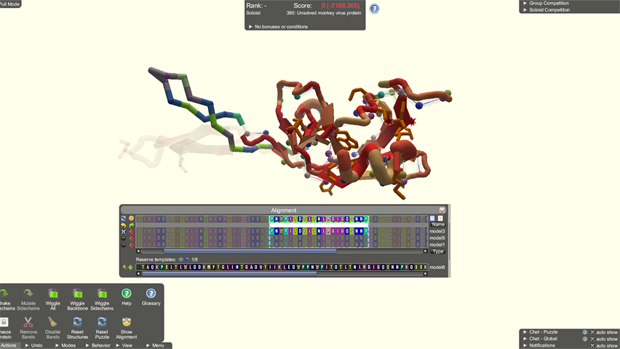
CBC has a story about how Gamers’ discovery could generate anti-HIV drugs (Sept. 19, 2011). The story is about how players of Fold.It have solved a protein folding problem related to AIDS which has been recently published. (The paper is here.)

What is neat about this project is that it is an example of “citizen science” or crowdsourcing for research. Rather than use the computer to analyze the data, the computer/network was used to make it easier for humans to solve the problems. They turned protein folding into a game that enticed volunteers to play for science.

Guardian visualization: Anders Breivik’s spider web of hate

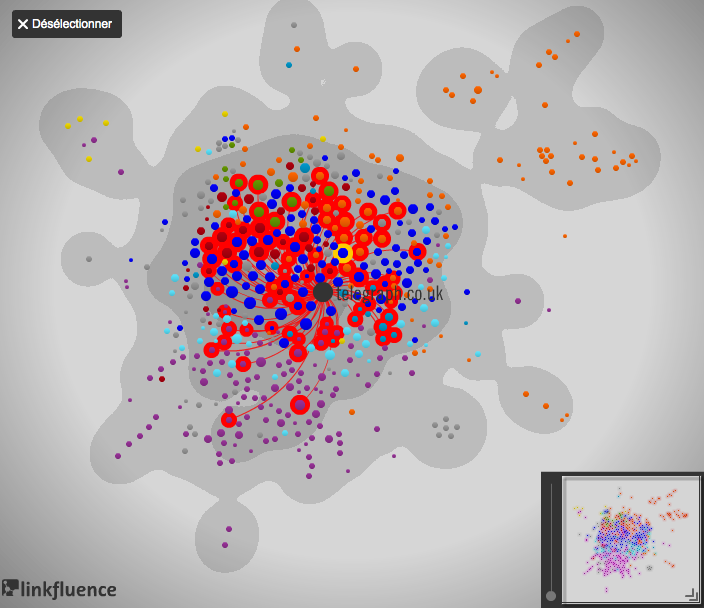
The Guardian has an interesting visualization of Anders Breivik’s manifesto mapped by linkfluence. Andrew Brown explains what they learned from the visualization in an article Anders Breivik’s spider web of hate (Sept. 7, 2011). The visualization shows the network of links from Breivik’s manifesto to other types of sites. There are a large number of links to mainstream media and to the Wikipedia, but also a number to other right wing sites. As Brown puts it,

The Guardian has analysed the webpages he links to, and the pages that these in turn link to, in order to expose a spider web of hatred based around three “counter-jihad” sites, two run by American rightwingers, and one by an eccentric Norwegian. All of these draw some of their inspiration from the Egyptian Jewish exile Gisele Littman, who writes under the name of Bat Ye’or, and who believes that the European elites have conspired against their people to hand the continent over to Muslims.