We have a new version of what used to be called “Voyeur”. It is now called Voyant Tools and has a new logo designed by Milena. Here is a test of embedding a panel. It is a Word Trend of Theoreti.ca with the word “games”.
We have a new version of what used to be called “Voyeur”. It is now called Voyant Tools and has a new logo designed by Milena. Here is a test of embedding a panel. It is a Word Trend of Theoreti.ca with the word “games”.
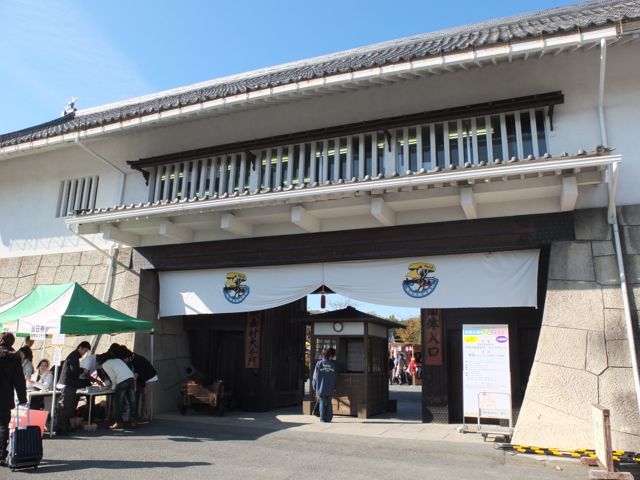
On November 26th I visited the Toei Kyoto Studio Park for the Uzumasa Sengoku Festival. I’ve posted my photographs here. The Toei Park is cinema theme park with sets that are still used along with all sorts of activities for visitors like a Ninja show. It is a bit of tourist trap, but that is part of its charm for those who want to be photographed in “authentic” settings as you will see. The Uzumasa Sengoku Festival is a two-day festival dedicated to Japanese Warring Period transmedia (manga, anime and games) which made is a perfect venue to study the interplay between media and/for fans. For the festival there was a pavillion dedicated to gaming where local game companies had booths, there were special events and some of the houses in the “historic” Kyoto setting were used by companies to promote new products about popular warring period anime and related media. Above all the cosplay (costume play) fans came out in droves to pose for pictures in the recreated streets of old Kyoto.
Continue reading Uzumasa Sengoku Festival

I am at the 2nd International Symposium on Digital Humanities for Japanese Arts and Cultures, DH-JAC 2011. I am writing a live conference report here on philosophi.ca. Yesterday I presented a response to Mitsuyuki Inaba’s survey of the work of the Web Technologies group (PDF) of the Global COE Digital Humanities Center for Japanese Arts and Cultures.
Today I was at the INKE Birds Of a Feather conference here in Kyoto. I wrote a conference report at, INKE Research Foundations For Understanding Books And Reading In A Digital Age Text And Beyond. It was a great day with lots of discussion thanks to the BOF format where papers were distributed beforehand so we could only talk for 5 minutes.
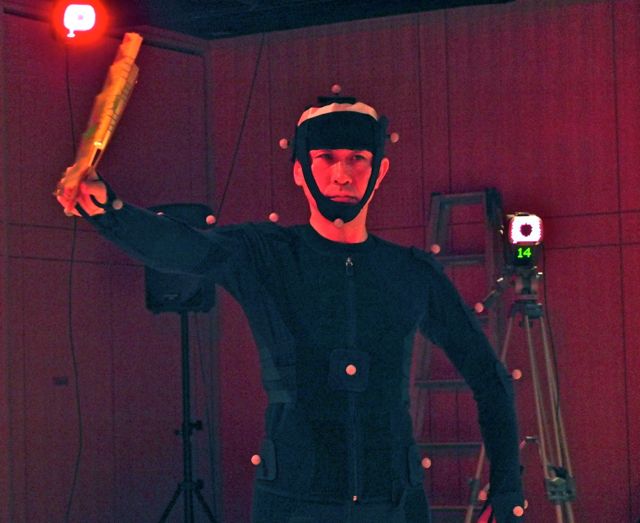
On November 10th I was invited by Dr. Kozaburo Hachimura to watch as his graduate students capture the motion of a master Noh performer. The motion capture was run in a special lab that was specifically built for this. They have a floor that was built to Noh theatre standards and we had to take our slippers off to protect the wood. There is a rig on the ceiling with the motion capture cameras and a sound booth in the back. When not in use for motion capture the room is used for seminars and meetings.

Thanks to John, I learned about a gem of a concordance tool for the Mac, PC and Linux called Antconc. It runs on your computer and you can download the tool from the author’s site, Laurence Anthony’s Software. If it is stable it could be a great tool to introduce students to text analysis. Looking at the screenshots it has some nice features for finding n-grams and can handle a set of texts.

The University of Alberta Faculty of Arts has written a nice little story/interview about our Humanities Computing graduate students working on computer games called, Student View: How videogames will change the world.

Stan pointed me to “an exquisite jQuery plugin for magical layouts” called Isotope. It allows you to have a layout of items (images of web sites or blocks of information) that can be rearranged with nice animations.
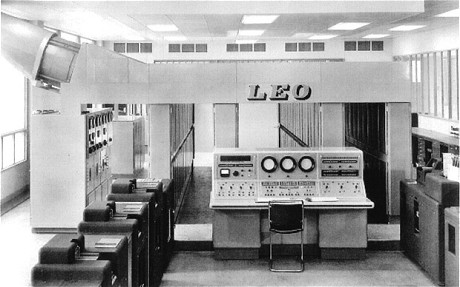
The Telegraph has a nice story about how How a chain of tea shops kickstarted the computer age (Christopher Williams, Nov. 10, 2011.) The story is about the 60th anniversary of the LEO which could be considered the first business computer. LEO was developed by the catering company J Lyons and Co which operated tea shops.
We came across an article in the Globe and Mail from Sept. 16, 1955, “Britain Leads in Office Automation” that talks about Ferranti and Leo. The article mentions that they and others “have not experienced much, if any, labour antagonism.” Automation putting people out of work was a major issue in those early years.
The Telegraph story sent me to a YouTube video of a BBC broadcast on the LEO that goes into fascinating detail about how it is “programmed” in hardware. They go from design to hardware as this is not a general purpose system that can be programmed in software.
Much of the discussion around the games industry here in Japan is taken up by the difficulties big companies like Nintendo are going through. Given that the big companies dominate the scene and that game studies here pay a lot of attention to industry, this means that most discussions with games researchers eventually circle around to the downturn in the industry and what Japan can do about it. But, what exactly is the problem with the Japanese games industry? Here are some of signs that worry games researchers here:
There is another side to the story. As Ashton Raze puts it in a the Telegraph Super Mario 3D Land review (Nov. 18, 2011),
While current talk of Nintendo is often mired in share prices and falling stocks, it’s easy to forget that they also make games like this; joy-filled, effortless romps, pure blue-sky gaming that can easily be hailed as the reason to own a given system.
Nintendo has also been here before. Osamu Inoue in a somewhat enthusiastic book Nintendo Magic documents how Satoru Iwata (the current president of Nintendo) led the company to record profitability after the poor performances of the Virtual Boy, N64, and GameCube. Eventually they got it right with the DS and Wii. Nintendo has the cash reserves and creativity reserves to weather poor years and systems that aren’t hits. The question is whether a strategy of focused on selling tightly coupled systems and software will work now that smartphones are powerful enough to be mobile systems, and gamers are moving to casual social games and large-scale virtual game worlds all playable on PCs? Who needs dedicated mobile systems or consoles?
Some of the questions that come up when we discuss the perceived downturn are: