Old Bailey Trials Are Tabulated for Scholars Online

The New York Times now has an article on the Criminal Intent project I was part of. See, Old Bailey Trials Are Tabulated for Scholars Online. They quote a historian who is sceptical of the results of mining, though he appreciates the resource.

“The Old Bailey Online project has done a great service in making those sources widely (and costlessly) available,” Mr. Langbein wrote in an e-mail. But he complained that the claims about data mining have “a breathless quality: ‘you can expect big things from us,’ but as yet it’s all method and no results.” He said that the new findings belittle the work of a generation of scholars who focused on the 18th century as the turning point in the evolution of the criminal justice system.

Alas, he seems didn’t read our report, but the summary in the Chronicle. It is easy to use cute phrases like “breathless quality”, but is he right? Time will tell, but I think the historians on our team have backed up the results found with mining and they never belittled the work of previous scholars – we saw ourselves building on it.

What can mining do? I think mining can give you a big picture so that you see the forest rather than trees in a way that no one could before. Conclusions about the shape of the forest have to be checked against other evidence, but the results of mining is evidence that is not breathless even if it takes your breath away. As Bill Turkel put it,

Mr. Turkel, who developed some of the digital tools, said that data mining reveals unexpected trends and connections that no one would have thought to look for before. Previous scholars “tended to cherry-pick anecdotes without having a sense that it was possible to measure all of that text and treat the whole archive as a single unit,” he said.

Of course, if you then leverage traditional evidence to buttress your argument then the mining is forgotten or trivialized.

Turkel: A research workflow with off-the-shelf tools

I had heard about Bill Turkel’s ‘super secret’ project and how he had decided to keep the idea of the project secret but share the method, which is the opposite of what we usually do. As I am not on research leave (sabbatical) and working on 5 books (ha!) I thought I should learn from Bill. Here is the link to his excellent research workflow, How To « William J Turkel. What I like is that it is all stuff you can do with off-the-shelf tools, though not necessarily free ones.

Digitization Day

The CIRCA Histories and Archives group I am part of is organizing the University of Alberta’s first Digitization Day.

This one-day event is a chance for research projects that are digitizing evidence to meet up with each other and with units on campus that provide relevant research services. Projects that are creating digital archives of different sorts will give short presentations as will units on campus that support research.

The idea is to bring a lot of digitization projects together to learn about each other and what is happening on campus. My sense is that we have hit a critical mass on campus and now that we have a trusted digital repository ERA (Education and Research Archive) it is time to start talking and sharing knowledge. Each project should not have to reinvent itself.

Australian R18+ games rating gets govt support « GamePron

From Slashdot I came across a story in GamePron about how Australian R18+ games rating gets govt support. In Australia any game that isn’t classified MA 15+ or below is refused classification and thus can’t be sold. (The Australian system is law unlike the voluntary industry ESRB system.) The Australian government is now considering adding a new R 18+ designation based on government supported studies and consultations.

Of particular interest is a literature review on Literature review on the impact of playing violent video games on aggression (PDF). This excellent review concludes that “research into the effects of VVGs (Violent Video Games) on aggression is contested and inconclusive.” (p. 5) This 50 page review by the Australian Government Attorney-General’s Department is a model of clarity and balance – it is worth quoting in greater detail,

There is some consensus in the research that some members of the community, such as people with psychotic personality traits, may be more affected by VVGs than others. However, there is mixed evidence as to whether VVGs have a greater impact on children.
A number of other findings of this review arguably reduce the policy relevance of VVG research.

  • There is stronger evidence of short-term VVG effects than of long-term effects.
  • The possibility that third variables (like aggressive personality, family and peer influence, socio-economic status) are behind the effect has not been well explored.
  • Researchers who argue that VVGs cause aggression have not engaged with or disproved alternative theories propagated by their critics.
  • There is little evidence that violent video games have a greater impact than other violent media. (p. 5)

WEME: Witches in Early Modern England

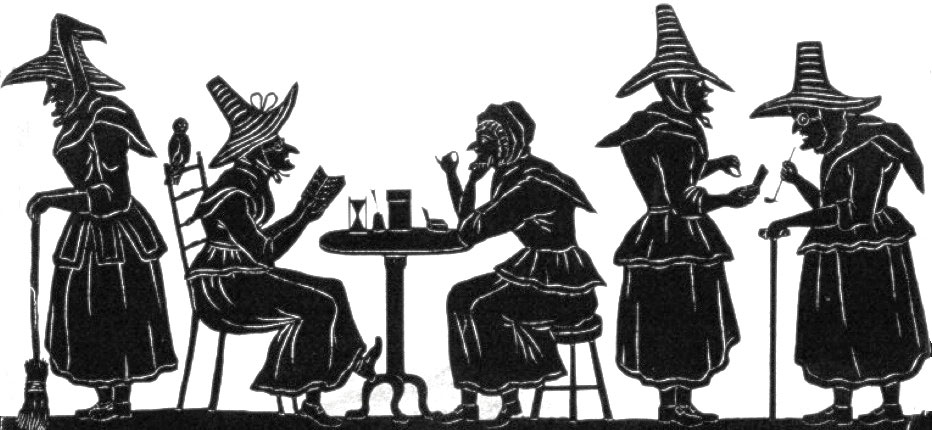
I’m at the Methods Commons workshop and Kirsten Uszkalo presented the WEME project (Witches in Early Modern England.) She showed (for the first time) the Throwing Bones interface which allows one to search the database and survey results as small decks of cards. Each deck has a different set of cards depending on the features of the hit. (See an example below.) You can use these sets to explore the hits. Very neat!

Three sets of cards

Towards a Methods Commons

Well my vacation is over and I’m facilitating a retreat on text methods across disciplines. (See Towards a Methods Commons.) With support from the ITST program at SSHRC we brought together 15 linguists, philosophers, historians, and literary scholars to discuss methods in a structured way. The goal is to sketch a commons that gathers “recipes” that show people how to do research things with electronic texts. Stay tuned for a draft web site in about 6 months.

DAEDALUS PROJECT: MMORPG Research, Cyberculture, MMORPG Psychology

A student in my Computers and Culture class drew our attention to the DAEDALUS PROJECT which is led by Nick Yee at PARC. The Daedalus Project is a blog about MMORG research with longish entries written like short articles that are gathered into issues. There is also The Daedalus Gateway that organizes the articles in a more thematic fashion.

Graph from Daedalus

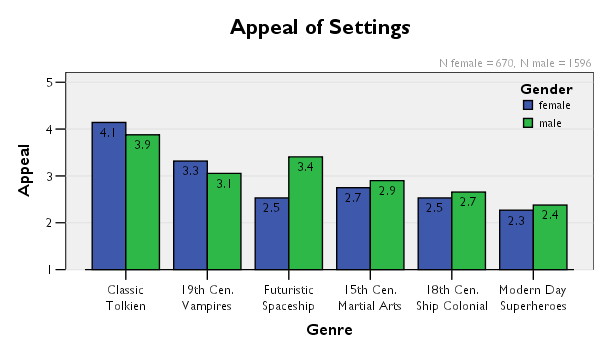
The articles are fascinating. The graph immediately above was taken from a study on Game Choices that looks at what sorts of characters players choose.

Many of the articles on The Daedalus Project are based on voluntary surveys (see his methodology). It is impressive that Yee is getting between 2000 and 4000 respondents and there is something to be learned by how he returns results, informs people of the survey and so on. I feel that The Daedalus Project represents some sort of new paradigm that crosses method, publication, and outreach.

Defeating Bedlam: Olivia Judson Blog

Olivia Judson of the New York Times has a nice story in her blog, Defeating Bedlam (Dec. 16, 2008). She talks about the old analogue way she did research gathering photocopies and how she now uses Zotero and Papers. Zotero is a Firefox Plugin for managing bibliographic references with really good integration with browsing. Papers is an iTunes (or iPhoto) for PDFs.

What is interesting is the reflection on research practice and how digital tools can fit in practices. Read the comments – you can see how others have used different tools from EndNote (which used to be good on a Mac but now has a clunky developed-on-a-pc feel) to Google Desktop.

AHRC ICT Methods Network: Final Report

I just came across the AHRC ICT Methods Network Final Report edited by Lorna Hughes. It is one of the most thorough final reports of its kind and nicely designed. There is a bitter-sweet conclusion to the report by Susan Hockey and Seamus Ross as the AHDS (Arts and Humanities Data Service) seems to have had its funding cut and therefore cannot renew the Methods Network (or support the Oxford Text Archive either.) As the home page of the AHDS says, “From April 2008 the Arts and Humanities Data Service (AHDS) will no longer be funded to provide a national service.” The conclusion by Susan and Seamus states unequivocally that,

In conclusion, the activities of the Methods Network demonstrated not only that ICT methods and tools are central to humanities scholarship, but also that there was ‘a very long way to go before ICT in humanities and arts research finds its rightful and needed places’. The investment in ICT in the arts and humanities needs to be much greater and it needs to reflect better the particularities and needs of individual communities. Researchers who do not have access to the most current technological methods and tools will not be able to keep
pace with the trends in scholarship. There is a real need for support and infrastructure for distributed research. (page 74)

Interestingly they propose a “flexible co-ordinated network of centres of excellence as the best way forwards”. (Page 74) I also liked the report because it kindly mentions TAPoR,

The group looked at how collaborations are fostered and supported, how partnerships are brokered in the first instance, and how this work is rewarded and evaluated by the different communities. Geoffrey Rockwell, Project Director of what is almost certainly the largest collaborative humanities software development project in the world, the TAPoR (http://portal.tapor.ca/portal/portal) project in Canada, shared his experiences of how the development of a collaborative and inter-institutional set of tools for text analysis was managed within the project. TAPoR was funded by the Canada Foundation for Innovation and succeeded in its overall goals in providing general purpose text analysis tools. The TAPoR site reports that its tools were run over 5000 times in November 2007. TAPoR provides strong evidence that networked collaborative tool development can succeed. (Page 63)

Digital Humanities Summer Institute

DHSI LogoI am now at the Digital Humanities Summer Institute at the University of Victoria where I am going to present an Institute Lecture tomorrow. I have been updating a small Conference Report (that is in progress and covers mostly the lectures.)

In particular it was interesting to hear how Synergies has evolved into a truly national knowledge-mobilization project with good ideas about how to make SSH research accessible to the broader public.